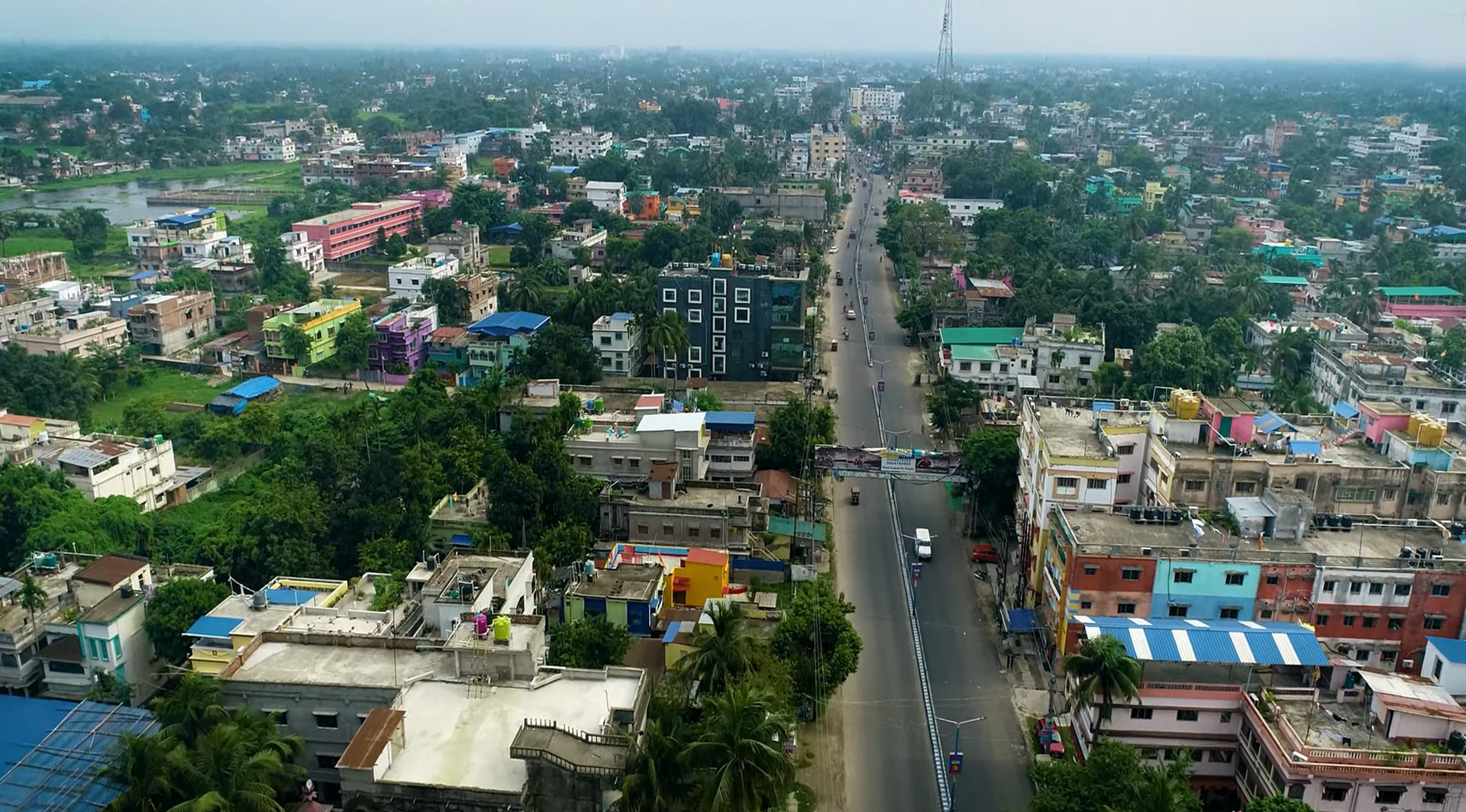
Balurghat does not try to impress visitors with dramatic landscapes or grand monuments. Instead, it draws you in slowly with its clean air, leafy roads and an old-world calm that feels increasingly rare in modern Bengal. As the district headquarters of South Dinajpur, Balurghat is both an administrative centre and a lived-in town where history, culture and everyday routines flow quietly together. For Indian and European travellers looking for an authentic North Bengal experience beyond crowded hill stations, Balurghat offers depth, stories and a strong sense of place when explored with the right local guidance.
Balurghat forms the heart of the Dakshin Dinajpur district, which was carved out of the old Dinajpur district in the 1990s, dividing it into South and North Dinajpur. However, the roots of this region go far deeper than its modern administrative identity. Historical records trace the area back to the Sen and Pal dynasties, a time when this region flourished as a centre of education, culture and political importance in North Bengal.
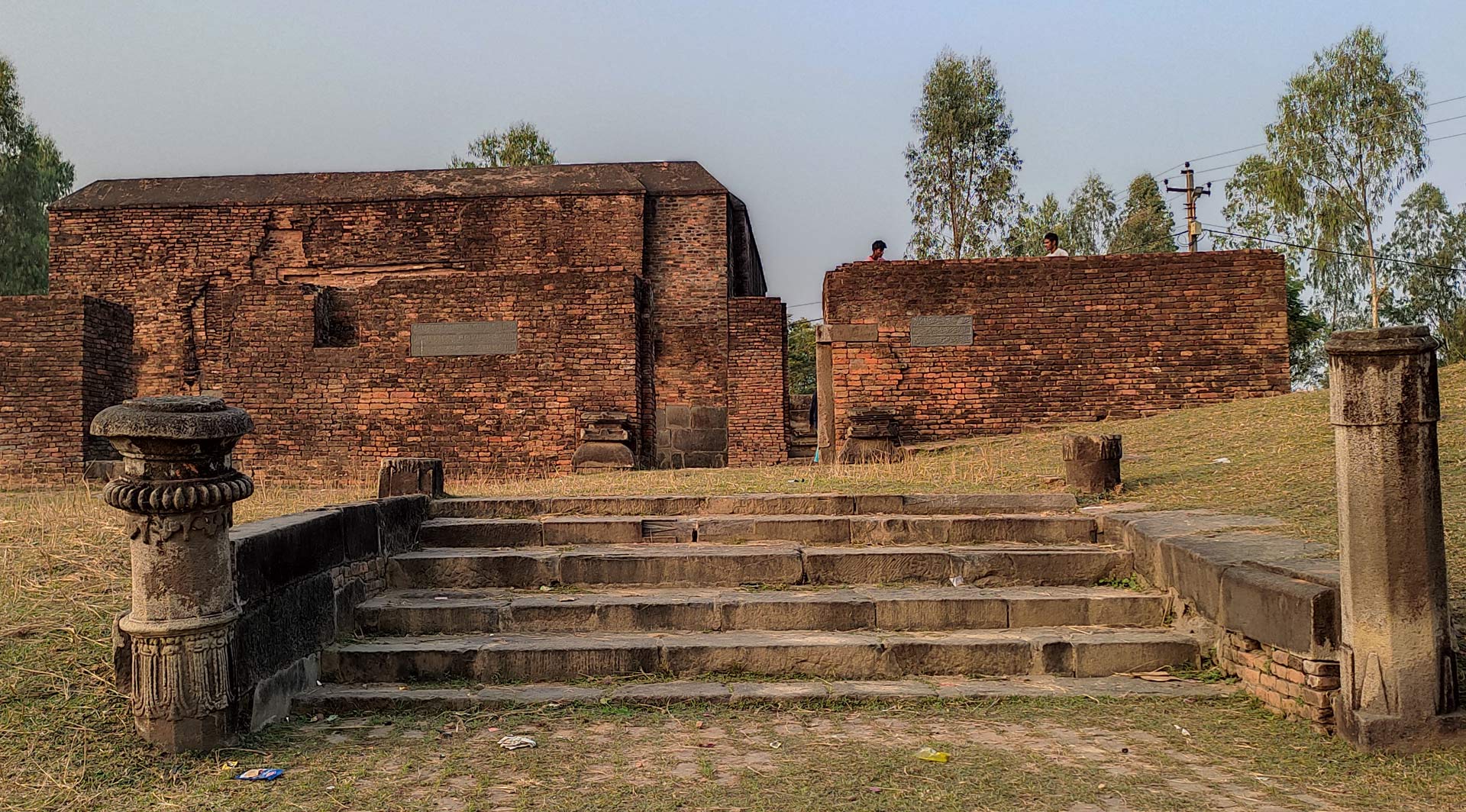
Ancient manuscripts and inscriptions reveal that an important district called Kotibarsha once existed here, with its capital at Devkot near present-day Gangarampur. This area was locally known as Bangarh, a name that still resonates strongly in the historical memory of the region. Excavations across South Dinajpur have uncovered tanks, sculptures, inscriptions and everyday objects, clearly indicating a prosperous and intellectually active civilisation stretching from the Ashokan age through the medieval period. Balurghat’s location along the Atreyee, Punarbhaba and Tangon rivers ensured trade connectivity and cultural exchange, shaping its long-standing importance.
Balurghat is a small municipal town known for its pollution-free environment, something that immediately stands out to visitors arriving from larger cities. The surrounding landscape is flat, fertile and river-fed, reflecting the agrarian backbone of the district. The presence of small forest patches near the town enhances its green character and offers easy nature escapes without long travel.
Raghunathpur forest lies barely a kilometre from Balurghat and serves as a popular breathing space for locals and visitors alike. Dogachhi forest, about six kilometres away, adds another recreational dimension with its canal where boating facilities attract families and tourists looking for relaxed outings. These green pockets contribute significantly to Balurghat’s reputation as a calm and liveable town rather than a busy transit hub.
Balurghat is well connected by road, making it accessible from key towns across North Bengal. Regular road links connect it with Siliguri, Kolkata, Malda and Raiganj. The distance from Siliguri is approximately 290 kilometres, while Raiganj lies around 105 kilometres away, and Malda is about 145 kilometres from Balurghat. These distances make Balurghat suitable both as a standalone destination and as part of a larger North Bengal itinerary covering Malda, North Dinajpur and even border region circuits.
For travellers planning a longer journey through Bengal, Balurghat works well as a cultural and historical pause between busier destinations. Travel becomes especially smooth when arranged through a professional tour operator familiar with road conditions and realistic travel timings.
One of the most rewarding stops in Balurghat is the College Museum, often referred to as the Museum of Balurghat. Though modest in size, it houses an impressive collection of antiques, including coins, inscriptions, sculptures, terracotta pieces and ornamental stones. Several inscriptions preserved here have been deciphered by scholars, shedding new light on the religious beliefs and administrative practices of the Pala period.
For history enthusiasts, especially European travellers interested in South Asian archaeology, this museum provides valuable context before visiting larger archaeological sites like Bangarh and Devkot. It reinforces the idea that Balurghat and its surroundings were once deeply integrated into the intellectual and cultural networks of early Bengal.
About eighteen kilometres from Balurghat along the Trimohini Patiram road lies Khanpur, a place of immense socio-political importance. Khanpur is remembered as a centre of the Tebhaga Movement, one of the most significant peasant movements in Bengal during the first half of the twentieth century.
At that time, farmers worked on lands owned by landlords known locally as zamindars and were entitled to only one-third of the produce. The Tebhaga Movement demanded that farmers retain two-thirds of what they produced, fundamentally challenging exploitative agrarian structures. Visiting Khanpur offers travellers insight into Bengal’s grassroots resistance movements and adds a powerful social history dimension to a Balurghat itinerary.
Located along the banks of the Atreyee River and the Balurghat-Maldah state highway, the Patiram Thakur Estate stands as a reminder of the region’s zamindari past. This old landlord residence also carries associations with the Tagore family, adding literary and cultural resonance to the site.
The Atreyee river flowing alongside enhances the atmosphere, making it a pleasant stop for travellers interested in colonial era architecture, riverine landscapes and the layered histories of rural Bengal. When visited with proper storytelling, the estate becomes more than a building and turns into a window into nineteenth and early twentieth-century social life.
Around twenty kilometres from Balurghat on the Balurghat-Malda highway lies the village of Bolla, home to the highly revered Bolla Ma Kali temple. The temple is deeply woven into local belief systems and comes with a compelling legend. According to popular lore, a local landlord was arrested by the British authorities for failing to pay taxes. Goddess Kali intervened miraculously, leading to his release the very next day. In gratitude, the landlord built this temple, which continues to attract devotees from across the district.
For visitors, the Bollakali Temple offers a chance to witness faith as a living, everyday practice rather than a staged ritual. Festivals and special worship days bring the area alive with devotion, making it a meaningful cultural experience when approached respectfully.
Tapan Dighi is one of the largest lakes in South Dinajpur and a significant historical landmark. Located at Tapan, about thirty-five kilometres from Balurghat and fifteen kilometres from Gangarampur, this vast water body stretches roughly two kilometres in length and about one kilometre in breadth.
Local tradition attributes the digging of Tapan Dighi to King Laxman Sen, linking it directly to the Sen dynasty that once ruled large parts of Bengal. The lake and its surroundings offer a serene atmosphere, ideal for quiet exploration, photography and understanding how water management played a crucial role in sustaining ancient settlements.
Balurghat’s appeal lies equally in its everyday simplicity. Raghunathpur and Dogachhi forests are popular picnic spots where locals gather on weekends, creating a lively yet grounded atmosphere. Boating at the Dogachhi canal is a favourite activity, especially for families. These spaces allow visitors to experience how residents of South Dinajpur relax and connect with nature without travelling far from town.
Balurghat and its surrounding attractions are spread out and deeply rooted in history, local movements and cultural memory. Without proper planning, travellers often miss the stories that give meaning to these places. A knowledgeable tour operator can link Balurghat with Bangarh, Gangarampur, Tapan and Malda, creating a coherent narrative rather than isolated visits.
NBTT Travel Solution Private Limited specialises in North Bengal travel and understands Balurghat’s role within the wider Dakshin Dinajpur and Malda circuits. Whether you are interested in heritage exploration, rural history, river landscapes or cultural immersion, their local expertise ensures smooth logistics and deeper engagement.
For customised itineraries, guided sightseeing and complete travel support in and around Balurghat, travellers are encouraged to contact NBTT Travel Solution Private Limited at +919733300696. With the right planning, Balurghat transforms from a quiet district town into a destination rich with stories and substance.
Siliguri Office - 19 MN Sarkar Road, Siliguri, West Bengal - 734001 Siliguri, State : West Bengal, Country : India. PIN : 734001
info@north-bengal.com
